
We are aware that crooks are asking for financial data to get the vaccination – SCAM
If you get a message like this – IT IS FALSE – do not reply or do anything
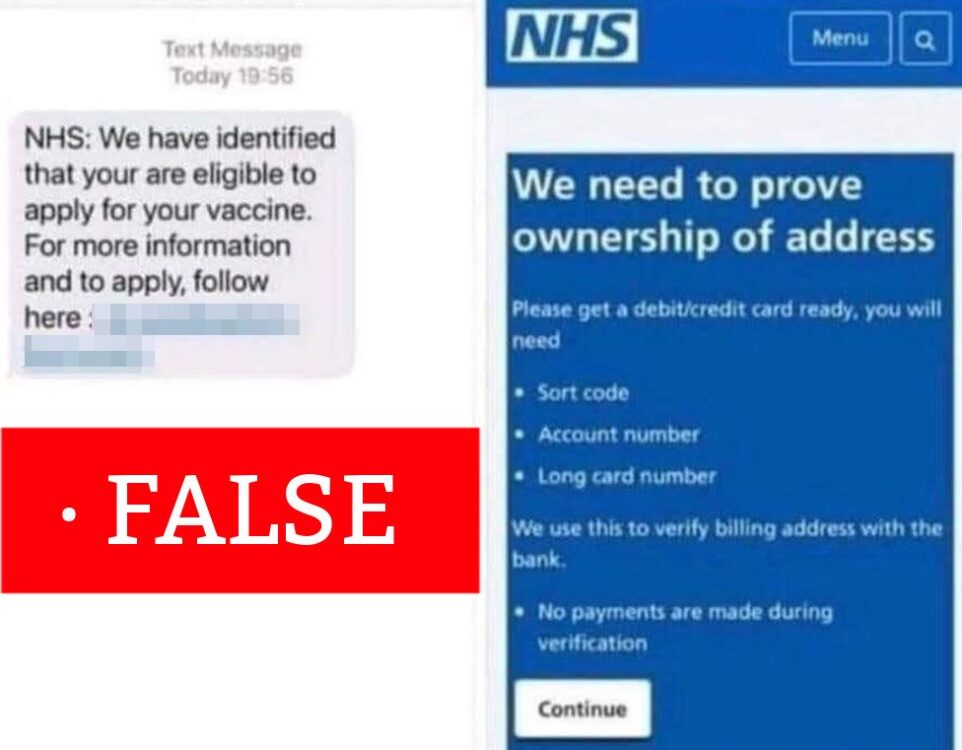
Here is some good advice . During the coronavirus (COVID-19) pandemic make sure you are on your guard against scams. Scammers are taking advantage of the current coronavirus situation, whether it is to extort money, or to gain access to your home. Online shopping scams are the most widely reported.
Spotting a coronavirus scam
Scammers often make contact by email, phone calls, text messages, social media posts or calling at your door.
If in doubt, apply the ‘scam’ test:
- s – seems too good to be true
- c – contacted out of the blue
- a – asked for personal details
- m – money is requested
Common COVID-19 consumer scams
Commonly reported scams include:
- online shopping scams where people order protective face masks, hand sanitiser and other products that are never delivered
- sales of fake testing kits or supposed cures for the virus
- fraudsters posing as a genuine organisation, including banks, police officers, and the government
- targeting of people who may be vulnerable or increasingly isolated at home by leaving cards through their doors pretending to be from organisations such as the Red Cross offering services for payment
- coronavirus-themed phishing emails which try to trick people into opening malicious attachments on emails that can allow fraudsters access to sensitive personal information, such as passwords, email logins and banking details
- fraudsters sending investment and trading advice in an attempt to convince readers to take advantage of the coronavirus economic impact
- scammers targeting people on benefits by offering to ‘help’ them apply for interest-free government loans – once the scammers have the victim’s personal details they use them to apply for an advance loan of Universal Credit which the scammers take, causing the victim’s normal benefit payments to stop and leaving them with large loans to repay
Recent Comments