
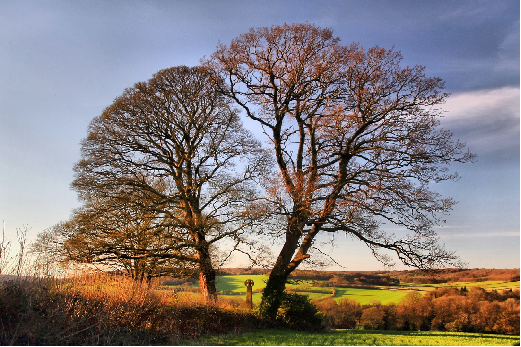
Some interesting history about the John Hampden monument.
We have been contacted by Derek Lester regarding people and events that led to erecting the John Hampden monument. He would very much appreciate any help you can give. This is what he wrote. (If you wish to comment, please write to him direct at dereklester@waitrose.com)
The Bucks Explorer by K. Bergamer, states ‘the monument was set up on September 11th 1863, by a group of Hampden’s admirers, led by Lord Chief Justice William Erle’. Who ordered that a monument would be erected? Who financed the construction of the ‘Ship-money’, Honor End, monument? When was it unveiled and by who? The name and date of newspapers that reported such a momentous occasion? It begs the question, ‘who gained permission from the Lord of the Manor (Hampden Estates) to erect a monument on his land’? Could you fill in the details?
John Hampden Society’s The Patriot www.johnhampden.org/no-80-winter-20142015/ mentions a date of 1835 and that Lord Nugent was involved. In 1835 Nugent and the Earl were close and an examination of the records and newspapers for this period may be fruitful. Lord Nugent was uncovered as a fraud, the preface to the 3rd edition 1854 of Some Memorials… has Memoirs of Lord Nugent and on page lvxi (66) remarks that the Worthy Discourse was a figment of his imagination. John Hampden’s grand funeral a tissue of lies.
In 1863 The Derby Mercury published a series of letters (see attached) sent to them by Rector George Brooks of Great Hampden exhumation fame. In 1863 George Cameron Hampden engraved on John Hampden’s Monument at Chalgrove his rightful claim to the Hampden Estates. It begs the question whether Lord Chief Justice William Erle’s inscription on the Honor End monument is related.
The following is pure conjecture. Did Nugent have the Honor End monument erected in 1835 complete with an inscription that in 1863 became ‘unfashionable’. Did this prompt Lord Chief Justice William Erle to re-write the monument’s medallion? Just thinking out loud, would you investigate this aspect regarding the monument? Was an event recorded in the 1835 newspapers of the raising of the Honor End monument? Any snippets of information welcomed. Regards, Derek Lester.
EDITOR NOTE. Derek then sent a second mail as follows.
An interesting development has been found linking an ‘Erle’ with Lord Nugent. The item is found in the third edition of Some Memorials of John Hampden… which is prefaced with a Memoir of Lord Nugent. In page XI (11) in a footnote is the following:- ‘but on application to my friend the Rev. Christopher Erle, the Rector of Hardwicke in Bucks, whose learning and scholarship not less than his generous and kindly nature made him Lord Nugent’s valued neighbour and intimate friend in all the latter years of his life’.
Informed sources stated that Erle erected the monument in 1835. That William Erle put his monogram, W.E. 1863, on the monument may account for why there are no newspaper records if it was Christopher Erle who was instrumental in 1835 of raising it.
EDITOR NOTE. Derek then sent a third mail as follows.
John Hampden and the Battle of Chalgrove is ready for publication but resolving the questions asked, which can be included in the book, would make a better read. Lord Nugent wrote of the battle of Aylesbury in Some Memorials of John Hampden’s Death… (1832) volume two, pages 320 -322, of action described as, ‘where there was then no passage but a bad ford, swollen by the rains when he (Prince Rupert) found himself checked by Balfore’s horse and foot, in column, on the opposite bank’.
The Good and Joyfull Newes out of Buckinghamshire, a parliamentary broadsheet published at the time describes 10,000 men under Prince Rupert being defeated by 1,500 men under Sir William Balfour’s command. November 1819 The Gentleman’s Magazine published, 247 bodies had been unearthed at Holman’s Bridge, a claim refuted by The Bucks Herald November 1825. Archaeological investigation in 1994 in the vicinity of Holman’s Bridge determined that bodies allegedly found in 1818 were not taken from this site by reason that the soil was of the wrong type. Wanton Troopers Ian F. W. Beckett pages 137 -139 Pen and Sword ISBN 978 1 47385 603 5, has the details.
In St Mary’s churchyard, Hardwick and to the south of the tower is a sarcophagus said to contain the bones of 247 souls who fell at the battle of Aylesbury. Lord Nugent retired to live at Lillies, Weedon, which is just 300 yards from Hardwick church, in 1848. Nugent died 26th November 1850. At this time Rev. Christopher Erle, the father of Lord Chief Justice William Erle, is the Rector of St Mary’s, Hardwick. In 1851 William Erle erected a Celtic cross on Gibbet Hill, Hindhead, near identical to the cross at Honor End. The link wiki/William_Erle refers. Is there a connection to the raising of the Cross at Honor End?
Lord Nugent has to be involved with the raising of the Honor End monument, but what is the connection linking him to the others. Presuming the sarcophagus at Hardwick is on consecrated ground to site it there would require the Rector’s permission. This would be recorded in Hardwick’s Parish Register and this is held by the Bucks County Record Office, Aylesbury. The date of the entry is likely to be found after Nugent coming to Lillies in 1848 and his death in November 1850. Volunteers required to go to the Record Office find the entry and report back.
There may be a common thread linking the Honor end monument to the supposed battle of Aylesbury, bodies to Hardwick, the Chalgrove monument and the Worthy Discourse. Rector Robert Lenthall presided over St Peter and St Paul’s church at Great Missenden in the 1630s. Many of the local residents being Puritans from Great Missenden and Prestwood emigrated to New England in the early 1630s.
Evidence is still being gathered but it seems the Fleetwood’s sponsored Robert Lenthall to sail with his family 1637/8 to Weymouth Mass. taking the news that John Hampden had lost his case in 1637 fighting the King over Ship-money. The Fleetwood family of Prestwood house was 500 yards from the site of the Honor End monument and was a neighbour of the earl of Bucks. Whether the Fleetwood’s sponsored the Honor End Monument in 1837 for the 200th anniversary of its Rector leaving the parish is to be explored. The Rector’s association with John Hampden and Great Hampden church added to which Nugent’s supposed exhumation may have given a desire to raise a monument on Hampden Estate. Being close neighbours of the Earl of Bucks and with the common interest of Rector Robert Lenthall, John Hampden and Ship-money permission to raise the monument on his estate and without any notification or fuss could easily be imagined.
Nugent’s book Some Memorials… was short of detail in reference to the supposed battle of Aylesbury. By inventing the story of the 247 bodies and raising the monument at Hardwick maybe in 1642 for the 200th anniversary was sufficient for him to claim the battle of Aylesbury as his own.
The monument at Chalgrove was raised for 200th anniversary of the battle of Chalgrove. Nugent had already claimed the battle of Chalgrove, the monument ‘cemented’ the prerogative. Nugent’s Worthy Discourse of 1847 was supposedly taken from Dr William Spurstow’s article of 1647. Nugent gave John Hampden the funeral which he believed he deserved with another 200th anniversary date. Is the 200th anniversary the key.
The site of the Ship Money monument is managed by the Chiltern Society and maintained by volunteers. There is a circular John Hampden walk which connects the monument to the church and house. This walk is planned to be slightly rerouted to avoid walking along Honor End Lane, a narrow lane with a lot of traffic including HGVs.
The important inscription on the sandstone monument, which underlines the significance of Hampden’s stand on the principle of the primacy of parliament, is wearing away, and there are plans to re-etch it.
Peter,
My investigation is continuing and has revealed the monument was carved by a Mr William Wendy Thompson at Kingsbury, Aylesbury and he lived in 2 Britannia Street next to the Red Lion.
An extensive search of many newspapers was made using British Newspapers Online incorporating dates from Sept 1863 – to May 1895. Bucks Herald 25 March 1893 has the phrase ‘and not far distant is (NB) the ‘plot’ of ground for which he assessed to the Ship-money.’ On another occasion sixty members of the Norwood Athenaeum Society, an erudite historical group, visited the Earl of Buckinghamshire at Great Hampden. The Bucks Herald 17th June 1893 recorded the event in detail, but gave no mention they had visited or enquired after the monument.
The Bucks Herald 25 May 1895 reported a group of 26 had had their photograph taken in front of the Hampden monument at Prestwood.
Would the Chiltern Society ask its members and/or put a request out over Facebook whether they have a photograph of the monument earlier than 1895. Derek